TOP

Coat of Generosity – A Final Ornament of Love and Remembrance

Through a generous donation from AFC Board member Ralph Childs, we present our last holiday ornament up for raffle at tomorrow’s (12/13) Asians and Friends Chicago Holiday Dinner. It’s a Christopher Radko ornament from Macy’s called “Quilt ‘n’ Claus” and was inspired by the Names Project Quilt. Santa’s robe is made up of quilt panels and makes a beautiful ornament and very timely with World AIDS day this month. A portion of the ornament price is donated to the AIDS Awareness Foundation by Radko.

We’ve given a final head count today, but we will have room for people who show up without an RSVP, so please come even if you didn’t have time to RSVP. It’s at Riques Regional Mexican Restaurant, 5004 N. Sheridan in Chicago. We have reserved their “back room” for our event, which will start at 7 p.m. with buffet dinner, starter beer and wine and sangria. $35 with dancing at Big Chicks to follow.

Happiest of holidays to all!

Read More
TOP

AFC Bear Ornament for Dec. 13 Holiday Dinner

Our latest ornament to be raffled off at our Sat. Dec. 13, 2008 Holiday Dinner is the AFC Polar Bear. Board members placed the AFC logo on “Bruce” and dubbed him our Yuletide mascot. The event will begin at 7 p.m. and will be at Riques Restaurant, 5004 N. Sheridan in Chicago just a few doors south of Big Chicks (a couple blocks south of Foster). Buffet with starter beer and wine–and now Sangria! BYOB allowed. Cost: $35. Please call our hotline to RSVP if you plan to come, (312) 409-1573. We need a head count prior to the event.

Polar Bear

Polar Bear

Read More
TOP

Reaction to the Obama victory in Asia…

Fantastic read at Daily Kos: (click link for full article)

Even if you are not an Obama supporter, the world thinks much better of us now, based on the reaction the writer is hearing:

Upon seeing my button, everyone, without exception, smiles.  I have received preferential treatment all day long. They didn’t make me pay extra for a heavy bag, they treated me in short, like royalty. The stewardess told the pilot, who stood up in the cock pit to give me a thumbs up.  Even the immigration official barely looked at my passport.  He was much more interested in knowing an Obama supporter and what I thought would happen today.

<…>

The man behind the counter is Malaysian.  He asks if I voted and when I confirm I have he laughs really loud and says something to the other official sitting next to him.  This man laughs too.  They both look at me intently.  The one, fighting to find the right english begins, “This is (something in Malay).  I smile saying I don’t understand.  He looks at his colleague and rattles something in Malay…The man says just a minute.  He gets out a book.  It is an english translation book.  He says something to the man and hands him the book…pointing to a line on the page.  The 1st man turns back to me and says…”this is fan/tas/a/tic…fan-tas-aahhh-tic…how do you say?”  I tell him, yes, he is right “Fantastic”.  They laugh again at their attempts.  I laugh too.

Read More
TOP

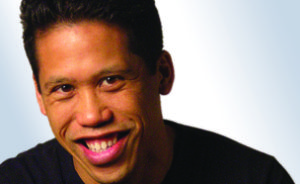
Gay South Korean Actor Found Dead

From Towleroad:

South Korean actor Kim Ji-hoo took his own life earlier this week, the Korea Times reports.

A note at the scene read: “I’m lonely and in a difficult situation. Please cremate my body.”

Kim was 23: “Police said his suicide reflects public prejudice toward gay people and their difficulty in succeeding in the entertainment industry. Following the announcement of his sexual orientation, Kim’s management agency did not renew his contract and many TV programs and fashion shows cancelled his appearances. His blog was bombarded with numerous messages denouncing his sexual orientation. ‘He underwent many professional and personal difficulties following his coming-out,’ Kim’s mother said during police questioning.”

Gay Actor Found Dead in Apparent Suicide [korea times]

Read More
TOP

10/13 – What Does This Election Mean For Asian Americans?

“What Does This Election Mean For Asian Americans?”

Monday, Oct. 13
3:00 p.m.
Addams Hall #207

Why should Asian Americans care about this election? Does my vote really
matter? Learn more about the issues that impact Asian Americans in this
election cycle and the need for Asian American political leaders. Also
learn about the voting power of Asian Americans and how to make your voice
heard in our political process.

Panelists:
* April Lewton, Community Organizer for the Asian American Institute of
Chicago who, in collaboration with community leaders, developed the 2008
Asian American Issues Platform for Illinois, a guide to Asian American
issues important to this year’s election.
* Ann Kalayil, founder of the South Asian American Policy and Research
Institute who has been involved in a variety of political campaigns and
Asian American political organizations.

Sponsored by UIC’s Asian American Resource and Cultural Center. For more
information, contact ckodama@uic.edu or 312-413-9653, or visit aarcc.uic.edu.

To see some fun announcements about why Asian Americans should vote,
visit: http://www.sdaff.org/reelvote2008psa.php . Get inspired and vote!

Note: the deadline to register to vote in Illinois is Tues., Oct. 7. To
register (including changing your address), pick up a form at the UIC
Library or visit
http://www.elections.state.il.us/votinginformation/Register.aspx

Corinne M. Kodama, Associate Director
Asian American Resource & Cultural Center (MC 203)
University of Illinois at Chicago
826 S. Halsted St., Rm 101 (Taft Hall)
Chicago IL 60607-7029
312-413-9653 ph, 312-413-9732 fx
ckodama@uic.edu
http://www.uic.edu/depts/oaa/AARCC/

Read More
TOP

The Asian-American Vote

Why don’t we ever hear about the Asian-American vote?

By Christopher Beam
Posted Wednesday, Oct. 1, 2008, at 4:57 PM ET

Presidential campaigns can feel like an informal census. As the candidates traverse the country, they pander to Latino voters, African-American voters, working-class white voters, older voters, younger voters, elite-college-graduate voters … everyone gets to feel important.

Except Asian-American voters. Somehow, amid all the demographic navel-gazing, the country’s third-largest, fastest-growing minority—now 15.2 million people, or 5 percent of the population—gets overlooked.

Not this week. Or, more accurately, not for several hours on Tuesday. That’s when a nonprofit group called Leadership Education for Asian Pacifics held a news conference excitingly titled “Political Role of Asian Americans Examined” while the Obama campaign scheduled interviews about its outreach efforts to Asian-American and Pacific Islander voters. The message from both events: Asian voters can make a difference. Attention must be paid.

More about that later. But first, a question: Why, with all our obsessing over demographics, do we hear so little about the Asian-American vote? 

The most obvious reason is size. Asian-Americans make up only 5 percent of the U.S. population. (Note: “Asian-American” here, and at the press conference Tuesday, is defined in the broadest possible sense, to include Chinese, Korean, Vietnamese, Taiwanese, Japanese, Thai, Filipino, Indian, Pakistani, and Indonesian, among others.) Fifteen million people is a lot, but not compared with other ethnic groups. African-Americans now number 38.4 million, according to the 2006 census; Latinos boast 44.4 million. Plus, Asian-Americans have the lowest proportion of eligible voters compared with the populations (about 52 percent) of any racial group. And of those, very few (about 50 percent in 2006) actually register to vote. So we’re talking about 7 million eligible voters and about 3 million actual voters.

But wait—it gets worse! The five states with the largest Asian populations are, in order, California, New York, Texas, Hawaii, and New Jersey. Not exactly the swingiest places around. There are two big exceptions: Nevada and Virginia. Both states have rapidly growing Asian-American populations—they constitute 6 percent of eligible voters in Virginia, possibly enough to swing a competitive presidential race.

Another difficulty is the Asian-American community’s heterogeneity. Koreans and Chinese and Vietnamese aren’t necessarily more or less fractured than Mexicans and Puerto Ricans and Cubans. But, unlike Latinos, they speak different languages. Campaigns can easily cut Spanish-language ads to run nationwide; it’s tougher to run ads in Vietnamese, Chinese, Japanese, etc. (Only about 60 percent of Asian-Americans speak English.) Then you’d need to target ethnic media, which is costly and, on the national level, of marginal benefit.

Then there is the difficulty of targeting Asian-American issues. This is a problem in ethnic politics generally—opinions on immigration, for example, are more diverse among blacks than among the interest groups that lobby on their behalf—but it is especially acute among Asian-Americans. Yes, there are general bread-and-butter issues like health care and education for which platitudes about access and opportunity are useful. There are also hyperspecific concerns that are not ideal campaign talking points: Chinese care a lot about U.S.-China relations. Taiwanese care about China-Taiwan. Vietnamese favor anti-Communist policies. And Filipinos often vote based on whoever supports benefits for Filipino veterans of World War II. Plus, segments of the Asian-American community often disagree—as Taiwanese-Americans and Chinese-Americans do on Taiwan, for example, or Pakistanis and Indians on Kashmir. 

Finally, as if demographics and geography and message weren’t challenging enough, there is partisanship. Or, more precisely, lack thereof. African-American voters break heavily toward Democrats; Latino voters (with the exception of Cubans) are also largely Democratic. Asian-Americans, meanwhile, can’t make up their minds. About a third of them are Republican, a third Democratic, and a third unaffiliated. This last group consists largely of immigrants—more than half of Asian-American were born overseas—who often won’t develop party loyalty for another generation.


 For more, visit http://www.slate.com/id/2201246/

Read More